Intrigues Between World Powers 1900: Difference between revisions
(→Russia) |
|||
| (15 intermediate revisions by 2 users not shown) | |||
| Line 1: | Line 1: | ||
;[[London - Pax Britannica]] | ;[[London - Pax Britannica]] | ||
== France == | == Directorate of Military Intelligence == | ||
=== Lady Anne Bowsley's Influence === | |||
Embraced by Valerius at the end of the 1600's, Lady Anne quickly took stock of the world around her and understood the need for accurate intelligence. Biding her time, she slowely began to gather men and women to her service who could bring her the information she needed. In 1794 she was allowed to embrace [[Lord Jacque Pareau]] known as Jacque the Pen for his lengthy diaries around the misbehavior of various London politicians. Jacques worked hard for his mistress gathering information and cataloguing it. He brought with him a coterie of people who helped him gather more information. While working against the Skeleton Keys and trying to gain control for Lady Anne, his ghouls and informants were formidable. | |||
=== The Skeleton Keys === | |||
Inspector Basil Rathbone of Scotland Yard led a secret society dedicated to ferreting out and eliminating supernatural threats; the Keys had even come to the attention of Queen Victoria herself. Reginald Proctor envied the Keys' political connections, which he lacked. | |||
And so, during the Albertan Reformation of 1851, the Skeleton Keys were recruited into the nascent Technocratic Union as a Convention, joining the Ivory Tower political bloc. | |||
This lasted until the Victorian Reformation of 1897, when the Ivory Tower itself became a new Convention, created from the merging of the Lightkeepers and Skeleton Keys. The Keys would later provide the inspiration behind the Men in Black. | |||
The first instance of an organization which would later become the DMI was the Department of Topography & Statistics, formed by Major Thomas Best Jervis, late of the Bombay Engineer Corps, in 1854 in the early stages of the Crimean War. | |||
In 1873 the Intelligence Branch was created within the Quartermaster General's Department with an initial staff of seven officers. Initially the Intelligence Branch was solely concerned with collecting intelligence, but under the leadership of Henry Brackenbury, a protege of influential Adjutant-General Lord Wolseley, it was increasingly concerned with planning. However, despite these steps towards a nascent general staff, the Intelligence Branch remained a purely advisory body, something that sharply limited its influence. The Branch was transferred to the Adjutant General's Department in 1888 and Brackenbury's title was changed to Director of Military Intelligence. | |||
After Wolseley's appointment as Commander-in-Chief of the Forces in 1895, he made the Director of Military Intelligence directly responsible to him. At the outbreak of the Second Boer War in 1899 the Intelligence Branch had 13 officers. Prior to the war it produced a highly accurate summary of the Boer republics' military potential and was the only part of the War Office to escape criticism in the resulting Royal Commission. In the immediate aftermath of the Boer War the Intelligence Branch was enlarged and its head elevated to Director General of Mobilisation and Military Intelligence. | |||
Following the Esher Report in 1904 the War Office was dramatically reorganized. The post of Commander-in-Chief was abolished and replaced by the Chief of the General Staff. Planning and intelligence would be the responsibility of the Directorate of Military Operations. | |||
== France & Great Britain == | |||
=== British and French "intrigue" around 1900: the path to the Entente Cordiale === | === British and French "intrigue" around 1900: the path to the Entente Cordiale === | ||
In the early 1900s, Great Britain and France were transitioning from centuries of rivalry to a more cooperative relationship, driven in part by a shared concern over Germany's growing power. This shift, culminating in the 1904 Entente Cordiale, involved complex diplomatic maneuvering, or "intrigue," as each nation sought to protect and expand its interests while navigating the changing European landscape. | In the early 1900s, Great Britain and France were transitioning from centuries of rivalry to a more cooperative relationship, driven in part by a shared concern over Germany's growing power. This shift, culminating in the 1904 Entente Cordiale, involved complex diplomatic maneuvering, or "intrigue," as each nation sought to protect and expand its interests while navigating the changing European landscape. | ||
| Line 24: | Line 44: | ||
This period demonstrates how, even amidst diplomatic overtures and the search for cooperation, the complex and sometimes secretive negotiations surrounding colonial ambitions and the balance of power could be seen as a form of "intrigue" in shaping the alliances that defined early 20th-century Europe. | This period demonstrates how, even amidst diplomatic overtures and the search for cooperation, the complex and sometimes secretive negotiations surrounding colonial ambitions and the balance of power could be seen as a form of "intrigue" in shaping the alliances that defined early 20th-century Europe. | ||
=== Agents of Great Britain === | |||
:[[File:Glanville Briley.jpg|250px]] -- [[Glanville Briley]] -- ''Section Chief'' -- [[British Military Intelligence -- Section 7|Section 7]] | |||
=== French Agents === | === French Agents === | ||
: [[File:Mauricette Bourreau.jpg|250px]] -- [[Mauricette Bourreau]] -- (''[[Deuxième Bureau]]'': French Second Desk - French Counter Intelligence) | |||
---- | |||
<br> | |||
---- | |||
== Germany == | == Germany == | ||
| Line 44: | Line 68: | ||
=== German Agents === | === German Agents === | ||
: [[File:Ignaz Koch.jpg|250px]] -- [[Ignaz Koch]] -- Attache of the German Consulate to Britain ('''N''' [[Nachrichten-Abteilung]]: German Naval Intelligence) | |||
------ | ---- | ||
<br> | |||
---- | |||
== Russia == | == Russia == | ||
| Line 53: | Line 79: | ||
=== Russian Agents === | === Russian Agents === | ||
: [[File:Konstantin Germogen Novikov.jpg|250px]] -- [[Konstantin Germogen Novikov]] (Russian ''Okhrana'') | : [[File:Konstantin Germogen Novikov.jpg|250px]] -- [[Konstantin Germogen Novikov]] (Russian ''[[Okhrana]]'') | ||
------ | ------ | ||
------ | ------ | ||
Latest revision as of 00:07, 30 September 2025
Directorate of Military Intelligence
Lady Anne Bowsley's Influence
Embraced by Valerius at the end of the 1600's, Lady Anne quickly took stock of the world around her and understood the need for accurate intelligence. Biding her time, she slowely began to gather men and women to her service who could bring her the information she needed. In 1794 she was allowed to embrace Lord Jacque Pareau known as Jacque the Pen for his lengthy diaries around the misbehavior of various London politicians. Jacques worked hard for his mistress gathering information and cataloguing it. He brought with him a coterie of people who helped him gather more information. While working against the Skeleton Keys and trying to gain control for Lady Anne, his ghouls and informants were formidable.
The Skeleton Keys
Inspector Basil Rathbone of Scotland Yard led a secret society dedicated to ferreting out and eliminating supernatural threats; the Keys had even come to the attention of Queen Victoria herself. Reginald Proctor envied the Keys' political connections, which he lacked.
And so, during the Albertan Reformation of 1851, the Skeleton Keys were recruited into the nascent Technocratic Union as a Convention, joining the Ivory Tower political bloc.
This lasted until the Victorian Reformation of 1897, when the Ivory Tower itself became a new Convention, created from the merging of the Lightkeepers and Skeleton Keys. The Keys would later provide the inspiration behind the Men in Black.
The first instance of an organization which would later become the DMI was the Department of Topography & Statistics, formed by Major Thomas Best Jervis, late of the Bombay Engineer Corps, in 1854 in the early stages of the Crimean War.
In 1873 the Intelligence Branch was created within the Quartermaster General's Department with an initial staff of seven officers. Initially the Intelligence Branch was solely concerned with collecting intelligence, but under the leadership of Henry Brackenbury, a protege of influential Adjutant-General Lord Wolseley, it was increasingly concerned with planning. However, despite these steps towards a nascent general staff, the Intelligence Branch remained a purely advisory body, something that sharply limited its influence. The Branch was transferred to the Adjutant General's Department in 1888 and Brackenbury's title was changed to Director of Military Intelligence.
After Wolseley's appointment as Commander-in-Chief of the Forces in 1895, he made the Director of Military Intelligence directly responsible to him. At the outbreak of the Second Boer War in 1899 the Intelligence Branch had 13 officers. Prior to the war it produced a highly accurate summary of the Boer republics' military potential and was the only part of the War Office to escape criticism in the resulting Royal Commission. In the immediate aftermath of the Boer War the Intelligence Branch was enlarged and its head elevated to Director General of Mobilisation and Military Intelligence.
Following the Esher Report in 1904 the War Office was dramatically reorganized. The post of Commander-in-Chief was abolished and replaced by the Chief of the General Staff. Planning and intelligence would be the responsibility of the Directorate of Military Operations.
France & Great Britain
British and French "intrigue" around 1900: the path to the Entente Cordiale
In the early 1900s, Great Britain and France were transitioning from centuries of rivalry to a more cooperative relationship, driven in part by a shared concern over Germany's growing power. This shift, culminating in the 1904 Entente Cordiale, involved complex diplomatic maneuvering, or "intrigue," as each nation sought to protect and expand its interests while navigating the changing European landscape.
Key areas of intrigue and diplomatic activity
Colonial rivalry and agreements
- Egypt and Morocco: Britain sought a free hand in Egypt, while France aimed to expand its influence in Morocco. The Entente Cordiale resolved these disputes, granting Britain dominance in Egypt and France a free hand in Morocco (with some consideration for Spanish interests).
Other colonial disputes: The agreement addressed various other colonial issues, including territories in Africa (e.g., Los Islands, Nigeria, Gambia) and Asia (e.g., Siam, New Hebrides).
German threat and strategic shifts
- Britain's "Splendid Isolation": Britain initially pursued a policy of "splendid isolation," focused on its vast empire. However, Germany's increasing naval power and expansionist ambitions prompted Britain to seek allies.
- Failure of Anglo-German alliance talks: Britain's attempts to form an alliance with Germany around 1900 were unsuccessful, partly due to anti-British sentiment in Germany stemming from the Boer War.
- Seeking new alliances: This led Britain to turn to France and Russia, laying the groundwork for the Triple Entente.
Diplomatic Initiatives and Key Figures
- French Foreign Minister Théophile Delcassé: Delcassé believed that a Franco-British understanding was essential for French security against Germany. He actively pursued rapprochement, including reaching agreements with Britain on African spheres of influence in 1899.
- British diplomats and pro-French sentiment: British officials like Sir Thomas Barclay organized exchanges and treaties, including the 1903 Anglo-French Treaty of Arbitration. King Edward VII's visit to Paris in 1903 was well-received and helped warm relations.
- The Entente Cordiale: The series of agreements signed in 1904, while not a formal military alliance, resolved colonial disputes and paved the way for diplomatic cooperation and military discussions between Britain and France. It was crucial in the lead-up to World War I, ultimately positioning Britain and France against Germany.
This period demonstrates how, even amidst diplomatic overtures and the search for cooperation, the complex and sometimes secretive negotiations surrounding colonial ambitions and the balance of power could be seen as a form of "intrigue" in shaping the alliances that defined early 20th-century Europe.
Agents of Great Britain
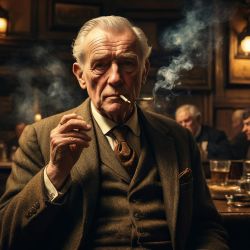 -- Glanville Briley -- Section Chief -- Section 7

French Agents
 -- Mauricette Bourreau -- (Deuxième Bureau: French Second Desk - French Counter Intelligence)

Germany
Between 1900 and 1914, Germany and Great Britain were locked in a complex relationship characterized by both intense rivalry and fleeting attempts at rapprochement, often described as an atmosphere of intrigue . This era witnessed several key elements of intrigue:
- Naval Arms Race: Kaiser Wilhelm II's ambitions for a powerful German Navy (Weltpolitik) directly challenged Britain's traditional naval supremacy, leading to a costly and tense naval race, particularly after the launch of the HMS Dreadnought in 1906. This was seen by Britain as a direct threat to its national security and empire.
- Failed Alliance Attempts: Despite the growing tensions, some British politicians initially favored an alliance with Germany, and attempts at negotiation took place between 1898 and 1903. However, anti-British sentiment in Germany, fueled by events like the Boer War, and the Kaiser's perceived erratic diplomacy hindered these efforts, according to EBSCO.
- Shifting Alliances & Fears of Encirclement: Driven by a desire to counter Germany's rising power, Britain abandoned its policy of "Splendid Isolation" and sought alliances with France (Entente Cordiale, 1904) and Russia (1907), forming the Triple Entente. This left Germany feeling increasingly "encircled" and fearing a coordinated threat to its continental ambitions.
- The Morocco Crises: German attempts to challenge French influence in Morocco (1905 and 1911) served only to strengthen the Anglo-French agreement and reinforce solidarity against Germany, according to Britannica.
- Kaiser Wilhelm II's Policies and Personality: The Kaiser's personal involvement in foreign policy and his often tactless and aggressive statements further exacerbated tensions. His desire for Germany to be a global power and his efforts to expand the German Navy were key factors in the deterioration of Anglo-German relations.
This period of intense Anglo-German rivalry, marked by diplomatic maneuvering, naval competition, and shifting alliances, created an atmosphere of suspicion and distrust that cast a long shadow over their pre-war diplomacy and ultimately contributed to the outbreak of World War I.
German Agents
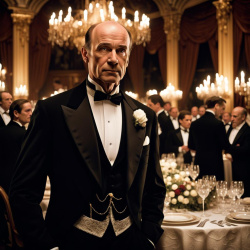 -- Ignaz Koch -- Attache of the German Consulate to Britain (N Nachrichten-Abteilung: German Naval Intelligence)

Russia
The Great Game was a rivalry between the 19th-century British and Russian empires over influence in Central Asia, primarily in Afghanistan, Persia, and Tibet. The two colonial empires used military interventions and diplomatic negotiations to acquire and redefine territories in Central and South Asia. Russia conquered Turkestan, and Britain expanded and set the borders of British India. By the early 20th century, a line of independent states, tribes, and monarchies from the shore of the Caspian Sea to the Eastern Himalayas were made into protectorates and territories of the two empires.
Though the Great Game was marked by distrust, diplomatic intrigue, and regional wars, it never erupted into a full-scale war directly between Russian and British colonial forces.
Russian Agents
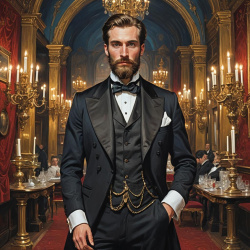 -- Konstantin Germogen Novikov (Russian Okhrana)
