|
|
| Line 1: |
Line 1: |
| ;[[Disciplines]] / [[Discipline Techniques]] | | ;[[St Mawes]] |
| | | [[]] |
| == <span style="color:#800000;">Introduction ==
| |
| Auspex gives the vampire uncanny sensory abilities.
| |
| She starts with the capacity to heighten her natural
| |
| senses significantly, but as she grows in power, she can
| |
| perceive psychic auras and read the thoughts of another
| |
| being. Auspex can also pierce through mental illusions
| |
| such as those created by Obfuscate — see the sidebar
| |
| “Seeing the Unseen” on p. 142 for more.
| |
| | |
| However, a vampire with Auspex needs to be careful.
| |
| Her increased sensory sensitivity can cause her to be
| |
| drawn in by beautiful things or stunned by loud noises or pungent smells. Sudden or dynamic events can
| |
| disorient an Auspex-using character unless her player
| |
| makes a Willpower roll to block them out (difficulty of
| |
| at least 4, although the more potent the source of distraction, the higher the difficulty). Failure overwhelms
| |
| the character’s senses, making her oblivious to her surroundings for a turn or two. While the Malkavians and
| |
| Toreador are more prone to these kinds of distractions,
| |
| the Tremere and Tzimisce aren’t immune.
| |
| | |
| Dots in Perception are very useful for using Auspex
| |
| powers, as more successes help the character gain more
| |
| sensory information.
| |
| ----
| |
| <br>
| |
| ----
| |
| ==<span style="font-size:large">●</span> <span style="color:#800000;"> '''Heightened Senses''' </span>==
| |
| <br>
| |
| This power increases the acuity of all of the vampire’s senses, effectively doubling the clarity and range
| |
| of sight, hearing, and smell. While her senses of taste
| |
| and touch extend no farther than normal, they likewise become far more distinct; the vampire could taste
| |
| the hint of liquor in a victim’s blood or feel the give of
| |
| the board concealing a hollow space in the floor. The
| |
| Kindred may magnify her senses at will, sustaining this
| |
| heightened focus for as long as she desires. At the Storyteller’s option, this may make hunting easier.
| |
| | |
| Occasionally, this talent provides extrasensory or
| |
| even precognitive insights. These brief, unfocused
| |
| glimpses may be odd premonitions, flashes of empathy,
| |
| or eerie feelings of foreboding. The vampire has no
| |
| control over these perceptions, but with practice can
| |
| learn to interpret them with a fair degree of accuracy.
| |
| | |
| Expanded senses come at a price, however. Bright
| |
| lights, loud noises and strong smells present a hazard
| |
| while the vampire uses this power. In addition to the
| |
| possibility for distraction, an especially sudden or potent stimulus (like the glare of a spotlight or a clap of
| |
| thunder) can blind or deafen the Kindred for an hour
| |
| or more.
| |
| | |
| <span style="color:#800000;">'''System:'''</span> It takes a reflexive action to activate this
| |
| ability, but no roll or other cost is required. In certain
| |
| circumstances, dice rolls associated with using the
| |
| character’s sense (such as Perception + Alertness) decrease in difficulty by a number equal to the character’s
| |
| Auspex rating when the power is engaged.
| |
| | |
| </span> <span style="color:#800000;">''Caveat: As a house rule we have changed this power, it gives you a number of extra dice equal to your Auspex rating on all Perception rolls.''</span>
| |
| | |
| The Storyteller may also use this power to see if the
| |
| character perceives a threat. In this case, the Storyteller privately rolls the character’s unmodified Auspex
| |
| rating, applying whatever difficulty he feels best suits
| |
| the circumstances. For example, sensing that a pistol is
| |
| pointed at the back of the character’s head may require
| |
| a roll of difficulty 5, while the sudden realization that
| |
| a rival for Primogen is planning her assassination may
| |
| require a 9. Note that even this “precognition” comes
| |
| only as a result of interpreting details the Kindred is
| |
| able to notice. It’s not an all-purpose insight or miraculous revelation.
| |
| | |
| At the character’s discretion, she may selectively
| |
| heighten one specific sense, rather than leaving them
| |
| all on. In these cases, the difficulty to perceive stimuli using that sense drops by one, but the difficulty to
| |
| avoid distraction or temporary bedazzlement increases
| |
| by one.
| |
| | |
| This power does not let characters see in pitch darkness, as does Eyes of the Beast (p. 199), but it does reduce difficulty penalties to act in such darkness from
| |
| +2 to +1, and the character may make ranged attacks
| |
| in pitch darkness if she can hear, smell, or otherwise detect her foe.
| |
| ----
| |
| <br>
| |
| ----
| |
| ==<span style="font-size:large">●●</span> <span style="color:#800000;"> '''Aura Perception''' </span>==
| |
| <br> | | <br> |
| Using this power, the vampire can perceive the psychic “auras” that radiate from mortals and supernatural
| |
| beings alike. These halos comprise a shifting series of
| |
| colors that take practice to discern with clarity. Even
| |
| the simplest individual has many shifting hues within
| |
| his aura; strong emotions predominate, while momentary impressions or deep secrets flash through in streaks
| |
| and swirls.
| |
|
| |
| The colors change in sympathy with the subject’s
| |
| emotional state, blending into new tones in a constantly dancing pattern. The stronger the emotions
| |
| involved, the more intense the hues become. A skilled
| |
| vampire can learn much from her subject by reading
| |
| the nuances of color and brilliance in the aura’s flow.
| |
|
| |
| Aside from perceiving emotional states, vampires use
| |
| Aura Perception to detect supernatural beings. The
| |
| colors in Kindred auras, while intense, are quite pale;
| |
| mage halos often flare and crackle with arcane power;
| |
| the race of shape-shifters has strikingly bright, almost
| |
| frantic, auras; ghosts have weak auras that flicker fitfully like a dying flame; and faerie creatures’ radiance is
| |
| shot through with capricious rainbow hues.
| |
|
| |
| <span style="color:#800000;">'''System:'''</span> After the character stares at the subject for
| |
| at least a few seconds, the player rolls Perception + Empathy (difficulty 8); each success indicates how much
| |
| of the subject’s aura the character sees and understands
| |
| (see the table below). A failure indicates that the play
| |
| of colors and patterns yields no prevailing impression.
| |
| A botch indicates a false or erroneous interpretation.
| |
| The Storyteller may wish to make this roll, thus keeping the player in the dark as to the veracity of the character’s interpretation.
| |
|
| |
| <span style="color:#800000;">'''Successes -- Result'''</span><br>
| |
| 1 success -- Can distinguish only the shade (pale or bright).<br>
| |
| 2 successes -- Can distinguish the main color.<br>
| |
| 3 successes -- Can recognize the color patterns.<br>
| |
| 4 successes -- Can detect subtle shifts.<br>
| |
| 5 successes -- Can identify mixtures of color and pattern.<br>
| |
|
| |
| The Aura Colors chart offers some example ideas
| |
| of common colors and the emotions they reflect that
| |
| Storytellers can use. Note that it is nearly impossible
| |
| to determine with certainty if a particular character is
| |
| lying or not with this power – vampires are inherently
| |
| deceitful by nature, but even mortals might react with
| |
| anxiety to questions while still being truthful. It is,
| |
| however, helpful in determine the target’s emotional
| |
| state, which might lead the vampire to decide that a
| |
| particular target is suspicious.
| |
|
| |
| {| class="wikitable"
| |
| |+ Aura Colors
| |
| |-
| |
| ! Condition !! Color
| |
| |-
| |
| | Afraid || Orange
| |
| |-
| |
| | Aggressive || Purple
| |
| |-
| |
| | Angry || Red
| |
| |-
| |
| | Bitter || Brown
| |
| |-
| |
| | Calm || Light Blue
| |
| |-
| |
| | Compassionate || Pink
| |
| |-
| |
| | Conservative || Lavender
| |
| |-
| |
| | Depressed || Gray
| |
| |-
| |
| | Desirous or Lustful || Deep Red
| |
| |-
| |
| | Distrustful || Light Green
| |
| |-
| |
| | Envious || Dark Green
| |
| |-
| |
| | Excited || Violet
| |
| |-
| |
| | Generous || Rose
| |
| |-
| |
| | Happy || Vermilion
| |
| |-
| |
| | Hateful || Black
| |
| |-
| |
| | Idealistic || Yellow
| |
| |-
| |
| | Innocent || White
| |
| |-
| |
| | Lovestruck || Blue
| |
| |-
| |
| | Obsessed || Green
| |
| |-
| |
| | Sad || Silver
| |
| |-
| |
| | Spiritual || Gold
| |
| |-
| |
| | Suspicious || Dark Blue
| |
| |-
| |
| | Anxious || Auras appear scrambled like static or white noise
| |
| |-
| |
| | Confused || Mottled, shifting colors
| |
| |-
| |
| | Diablerist || Black veins in aura
| |
| |-
| |
| | Daydreaming || Sharp flickering colors
| |
| |-
| |
| | Frenzied || Rapidly rippling colors
| |
| |-
| |
| | Psychotic || Hypnotic, swirling colors
| |
| |-
| |
| | Vampire || Aura colors are pale
| |
| |-
| |
| | Ghoul || Pale blotches in the aura
| |
| |-
| |
| | Magic Use || Myriad sparkles in aura
| |
| |-
| |
| | Werebeast || Bright, vibrant aura
| |
| |-
| |
| | Ghost || Weak, intermittent aura
| |
| |-
| |
| | Faerie || Rainbow highlights in aura
| |
| |-
| |
| | Demon || Black, with swirling patterns of red.
| |
| |-
| |
| | Gallu || Pale brown with black and red veins swirling in hypnotic colors
| |
| |}
| |
|
| |
| A character may choose to perform a very cursory
| |
| aura scan of a large area like a nightclub’s dance floor
| |
| or the audience in a gallery. In this case, the player
| |
| decides which characteristic of auras she’s looking for,
| |
| and that’s the only information she’s able to glean if
| |
| the roll is successful. (At the Storyteller’s discretion,
| |
| on this general scan roll, more successes on the roll
| |
| may more quickly yield what the character seeks.) For
| |
| example, the player may specify, “Who’s the most nervous person in attendance?” or
| |
| “Are there any vampirically pale auras among the CEO’s entourage?” Thereafter, the player may narrow down her scrutiny of a
| |
| single individual, with an additional roll as normal.
| |
|
| |
| The character may focus in on a particular subject’s
| |
| aura only once per scene with any degree of clarity.
| |
| Any subsequent attempts that result in failure should
| |
| be considered botches. It is very easy for the character
| |
| to imagine seeing what she wants to see when judging someone’s intentions. After 24 hours, the character
| |
| may try again at no penalty.
| |
|
| |
| It is possible, though difficult, to sense the aura of a
| |
| being who is otherwise invisible to normal sight. Refer
| |
| to “Seeing the Unseen,” below, for more information.
| |
| ----
| |
| <br> | | <br> |
| ----
| | = ''Introduction'' = |
| {| class="wikitable"
| | [[File:St. Mawes Castle night.jpg]] |
| |+ Seeing the Unseen
| |
| |-
| |
| |<span style="font-size:large">●</span><span style="color:#800000;">'''Auspex:'''</span> enables Kindred to perceive many things beyond the limits of lesser senses.<br>
| |
| Among its many uses, Auspex can detect the presence of a supernatural being who is hidden from normal sight (a vampire using<br>
| |
| Obfuscate, for example, or a ghost) or pierce illusions created by the Discipline of Chimerstry. Note: “Normal sight” includes<br>
| |
| regular, non-Auspex use of the Awareness skill.<br>
| |
| |-
| |
| |<span style="font-size:large">●</span><span style="color:#800000;">'''Obfuscate:'''</span> When a vampire tries to use her
| |
| heightened perceptions to notice a Kindred
| |
| hidden with Obfuscate, she detects the sub-
| |
| ject’s presence if her Auspex rating is higher
| |
| than his Obfuscate, and she succeeds at a
| |
| Perception + Awareness roll (difficulty equals
| |
| 7 minus the number of dots by which her
| |
| Auspex exceeds his Obfuscate). Conversely,
| |
| if the target’s Obfuscate outranks her Auspex,
| |
| he remains undiscovered. If the two ratings
| |
| are equal, both characters make a resisted roll
| |
| of Perception + Awareness (Auspex user)
| |
| against Manipulation + Subterfuge (Obfuscate
| |
| user). The difficulty for both rolls is 7, and the
| |
| character with the most successes wins.
| |
| |-
| |
| |<span style="font-size:large">●</span><span style="color:#800000;">'''Chimerstry:'''</span> Likewise, vampires with
| |
| Auspex may seek to penetrate illusions cre-
| |
| ated with Chimerstry. The Auspex-wielder
| |
| must actively seek to pierce the illusion (i.e.,
| |
| the player must tell the Storyteller that his
| |
| character is trying to detect an illusion).
| |
| The Auspex-user and Chimerstry-wielder
| |
| then compare relative ratings, per Obfuscate,
| |
| above. The process is otherwise identical to
| |
| piercing Obfuscate.
| |
| |-
| |
| |<span style="font-size:large">●</span><span style="color:#800000;">'''Other Powers:'''</span> Since the powers of beings
| |
| like magi and wraiths function differently
| |
| from vampiric Disciplines, a simple compari-
| |
| son of relative ratings isn’t applicable. To keep
| |
| things simple, both characters make a resisted
| |
| roll. The vampire rolls Perception + Aware-
| |
| ness, while the subject rolls Manipulation +
| |
| Subterfuge. Again, the difficulty is 7, and the
| |
| character with the most successes wins.
| |
| |}
| |
| ----
| |
| <br> | | <br> |
| ----
| |
| ==<span style="font-size:large">●●●</span> <span style="color:#800000;"> '''The Spirit’s Touch'''</span>==
| |
| <br> | | <br> |
| When someone handles an object for any length
| | '''St Mawes Castle''' (Cornish: Kastel Lannvowsedh) is an artillery fort constructed by Henry VIII near Falmouth, Cornwall, between 1540 and 1542. It formed part of the King's Device programme to protect against invasion from France and the Holy Roman Empire, and defended the Carrick Roads waterway at the mouth of the River Fal. |
| of time, he leaves a psychic impression on the item.
| |
| A vampire with this level of Auspex can “read” these
| |
| sensations, learning who handled the object, when he
| |
| last held it, and what was done with it recently.
| |
| | |
| <span style="color:#800000;">''For these purposes, a corpse counts as an “object” and can be read accordingly.''</span>
| |
| | |
| These visions are seldom clear
| |
| and detailed, registering more like a kind of “psychic snapshot.” Still, the Kindred can learn much even
| |
| from such a glimpse. Although most visions concern
| |
| the last person to handle the item, a long-time owner | |
| leaves a stronger impression than someone who held
| |
| the object briefly.
| |
| | |
| Gleaning information from the spiritual residue re-
| |
| quires the vampire to hold the object and enter a shallow trance. She is only marginally aware of her surroundings while using The Spirit’s Touch, but a loud
| |
| noise or jarring physical sensation breaks the trance
| |
| instantly.
| |
| | |
| <span style="color:#800000;">'''System:'''</span> The player rolls Perception + Empathy. The
| |
| difficulty is determined by the age of the impressions
| |
| and the mental and spiritual strength of the person or
| |
| event that left them. Sensing information from a pistol used for a murder hours ago may require a 4, while
| |
| learning who owned a bloodstained puppet fashioned a century ago might be a 9.
| |
|
| |
|
| The greater the individual’s emotional connection | | == History == |
| to the object, the stronger the impression he leaves | | The castle was built under the direction of Thomas Treffry to a clover leaf design, with a four-storey central tower and three protruding, round bastions that formed gun platforms. It was initially armed with 19 artillery pieces, intended for use against enemy shipping, operating in partnership with its sister castle of Pendennis on the other side of the estuary. During the English Civil War, St Mawes was held by Royalist supporters of King Charles I, but surrendered to a Parliamentary army in 1646 in the final phase of the conflict. |
| on it — and the more information the Kindred can | |
| glean from it. Events involving strong emotions (a gift-
| |
| giving, a torture, a long family history) likewise leave
| |
| stronger impressions than short or casual contact do.
| |
| Assume that each success offers one piece of information, as per the chart below.
| |
|
| |
|
| <span style="color:#800000;">'''Successes -- Information'''</span><br>
| | The castle continued in use as a fort through the 18th and 19th centuries. In the early 1850s, fears of a fresh conflict with France, combined with changes in military technology, led to the redevelopment of the fortification. The out-dated Henrician castle was turned into a barracks and substantial gun batteries were constructed beneath it, equipped with the latest naval artillery. In the 1880s and 1890s an electrically operated minefield was laid across the River Fal, operated from St Mawes and Pendennis, and new, quick-firing guns were installed at St Mawes to support these defences. |
| Botch -- The character is overwhelmed by psychic impressions for the next scene and unable to act.<br>
| |
| Failure -- No information of value.<br>
| |
| 1 success -- Very basic information: the last owner’s gender or hair color, for instance.<br>
| |
| 2 successes -- A second piece of basic information.<br>
| |
| 3 successes -- More useful information about the last owner, such as age and state of mind the last time he used the item.<br>
| |
| 4 successes -- The person’s name.<br>
| |
| 5+ successes -- A wealth of information: nearly anything you want to know about the person’s relationship with that object is available.<br>
| |
|
| |
|
| At the Storyteller’s discretion, some impressions
| | == Defenses & Layout == |
| on objects may be so strong — a knife plunged into
| | [[File:New-warfare-1853-plan-jpg.jpg]] |
| Caesar’s breast, the tip of the Spear of Destiny, a fang
| |
| pulled from the maw of Dracula — that any use of this
| |
| power may be deemed a success.
| |
| ---- | |
| <br> | | <br> |
| ----
| |
| ==<span style="font-size:large">●●●●</span> <span style="color:#800000;"> '''Telepathy'''</span>==
| |
| <br> | | <br> |
| The vampire projects a portion of her consciousness
| | St. Mawes Castle, a coastal artillery fort built by Henry VIII in the 16th century, features a distinctive cloverleaf plan with a central tower and three forward-facing bastions. Historic England archive plans and images show the castle's layout, including gun embrasures, a lookout turret, and a parapetted gun platform. The bastions were designed to house various artillery pieces, including swivel mounts and larger guns. |
| into a nearby mortal’s mind, creating a mental link
| |
| through which she can communicate wordlessly or
| |
| even read the target’s deepest thoughts. The Kindred
| |
| “hears” in her own mind the thoughts plucked from a
| |
| subject as if they were spoken to her.
| |
|
| |
|
| This is one of the most potent vampiric abilities,
| | === Detailed Breakdown === |
| since, given time, a Kindred can learn virtually any-
| | [[File:St Mawes Castle plan.jpg|500px]] |
| thing from a subject without him ever knowing. The
| |
| Tremere and Tzimisce in particular find this power especially useful in gleaning secrets from others, or for
| |
| directing their mortal followers with silent precision.
| |
| | |
| <span style="color:#800000;">'''System:'''</span> The player rolls Intelligence + Subterfuge
| |
| (difficulty of the subject’s current Willpower points).
| |
| Projecting thoughts into the target’s mind requires one
| |
| success. The subject recognizes that the thoughts come
| |
| from somewhere other than his own consciousness,
| |
| though he cannot discern their actual origin without a
| |
| successful Perception + Awareness roll (difficulty equal
| |
| to the vampire’s Manipulation + Subterfuge).
| |
| | |
| To read minds, one success must be rolled for each
| |
| item of information plucked or each layer of thought
| |
| pierced. Deep secrets or buried memories are harder to
| |
| obtain than surface emotions or unspoken comments,
| |
| requiring five or more successes to access.
| |
| | |
| Reading thoughts with Telepathy does not commonly work upon the undead mind. A character may
| |
| expend a Willpower point to make the effort, making the roll normally afterward. Likewise, it is equally
| |
| difficult to read the thoughts of other supernatural
| |
| creatures. However, the character may project her
| |
| thoughts without expending a Willpower point. These
| |
| thoughts, however, are still obviously intrusions into
| |
| the target’s mind, but the character may attempt to disguise her mental “voice” with a roll of Manipulation + Subterfuge (difficulty equals the target’s Perception + Awareness) so the target doesn’t recognize her as the “speaker.”
| |
| | |
| Storytellers are encouraged to describe thoughts as flowing streams of impressions and images, rather than as a sequence of prose (powers such as Telepathic Communication are of more use for that). Instead of making
| |
| flat statements like “He’s planning on killing his former lover’s new boyfriend,” say “You see a fleeting series
| |
| of visions: A couple kissing passionately in a doorway,
| |
| then the man walking alone at night; you suddenly see
| |
| your hands, knuckles white, wrapped around a steering wheel, with a figure crossing the street ahead; your
| |
| heart, mortal now and hammering with panic as you
| |
| hear the engine rev wildly; and above all, a blazing anger coupled with emotional agony and a panicked fear
| |
| of loss.” Such descriptions not only add to the story, but
| |
| they also force the player to interpret for herself what
| |
| her character gleans. After all, understanding minds —
| |
| especially highly emotional or deranged minds — is a
| |
| difficult and often puzzling task.
| |
| ----
| |
| <br> | | <br> |
| ----
| |
| <span style="font-size:large">●●●●●</span> <span style="color:#800000;"> '''Psychic Projection'''</span><br>
| |
| The Kindred with this awesome ability projects her
| |
| senses out of her physical shell, stepping from her body
| |
| as an entity of pure thought. The vampire’s astral form
| |
| is immune to physical damage or fatigue, and can “fly”
| |
| with blinding speed anywhere across the earth — or
| |
| even underground — so long as she remains below the
| |
| moon’s orbit.
| |
|
| |
| The Kindred’s material form lies in a torpid state
| |
| while her astral self is active, and the vampire isn’t
| |
| aware of anything that befalls her body until she returns
| |
| to it. An ephemeral silver cord connects the Kindred’s
| |
| psyche to her body. If this cord is severed, her consciousness becomes stranded in the astral plane (the realm of
| |
| ghosts, spirits, and shades). Attempting to return to the
| |
| vampire’s physical shell is a long and terrifying ordeal,
| |
| especially since there is no guarantee that she will accomplish the journey successfully. This significant danger keeps many Kindred from leaving their bodies for
| |
| long, but those who dare can learn much.
| |
|
| |
| <span style="color:#800000;">'''System:'''</span> Journeying in astral form requires the player
| |
| to expend a point of Willpower and make a Perception
| |
| + Awareness roll. Difficulty varies depending on the distance and complexity of the intended trip; 5 is within
| |
| sight, 7 is nearby or to a familiar location, and 9 reflects a
| |
| trip far from familiar territory (a first journey from North
| |
| America to the Far East; trying to shortcut through the
| |
| earth). The greater the number of successes rolled, the
| |
| more focused the character’s astral presence is, and the
| |
| easier it is for her to reach her desired destination.
| |
|
| |
| Failure means the character is unable to separate
| |
| her consciousness from her body, while a botch can
| |
| have nasty consequences — flinging her astral form to
| |
| a random destination on Earth or in the spirit realm,
| |
| arriving in a place where the sun is active (necessitating a frenzy roll, although the sunlight doesn’t do any
| |
| damage), or hurtling toward the desired destination so
| |
| forcefully that the silver cord snaps.
| |
|
| |
| The player may spend a point of Willpower to activate this power, and an additional point of Willpower to
| |
| gain the success necessary to perform the jaunt. This is
| |
| an exception to the normal rule where a player may not
| |
| spend more than a single point of Willpower per turn.
| |
|
| |
| Each scene in Psychic Projection requires another
| |
| point of Willpower and a new roll. Failure indicates
| |
| that the vampire has lost her way and must retrace the
| |
| path of her silver cord. A botch at this stage means the
| |
| cord snaps, stranding the character’s psychic form in
| |
| the mysterious astral plane.
| |
|
| |
| An astral form may travel at great speeds (the Storyteller can use roughly 1000 miles per hour or 1500
| |
| kilometers per hour as a general guide) and carries no
| |
| clothing or material objects of any kind. Some artifacts
| |
| are said to exist in the spirit world, and the character
| |
| can try to use one of these tools if she finds one. The
| |
| character cannot bring such relics to the physical world
| |
| when she returns to her body, however.
| |
|
| |
| Interaction with the physical world is impossible
| |
| while using Psychic Projection. At best, the character
| |
| may spend a Willpower point to manifest as a ghost-
| |
| like shape. This apparition lasts one turn before fading
| |
| away; while she can’t affect anything physically during this time, the character can speak. Despite lacking
| |
| physical substance, an astral character can use Auspex
| |
| normally. At the Storyteller’s discretion, such a character may employ some or all Animalism, Dementation, Dominate, Necromancy, Obtenebration, Presence, Thaumaturgy, and similar non-corporeal powers
| |
| she has, though this typically requires a minimum of
| |
| three successes on the initial Psychic Projection roll.
| |
|
| |
| If two astral shapes encounter one another, they
| |
| interact as if they were solid. They may talk, touch,
| |
| and even fight as if both were in the material world.
| |
| Since they have no physical bodies, astral characters
| |
| seeking to interact “physically” substitute Mental and
| |
| Social Traits for Physical ones (Wits replaces Dexterity, Manipulation supplants Strength, and Intelligence
| |
| replaces Stamina). Due to the lack of a material form,
| |
| the only real way to damage another psychic entity is
| |
| to cut its silver cord. When fighting this way, consider
| |
| Willpower points to be health levels; when a combat-
| |
| ant loses all of her Willpower, the cord is severed.
| |
|
| |
| Although an astrally projected character remains in
| |
| the reflection of the mortal world, she may venture further into the spirit realms, especially if she becomes
| |
| lost. Other beings with particular sensitivity to psychic
| |
| activity, such as ghosts, werewolves, and even some
| |
| magi, travel the astral plane as well, and can interact
| |
| with a vampire’s psychic presence normally (although
| |
| the astrally projected character is not considered a
| |
| “ghost” for powers such as Necromancy). The observing character notices the astrally projecting vampire
| |
| with a Perception + Awareness roll (difficulty 8), requiring more successes than the Psychic Projection
| |
| activation roll. Even those who do notice you won’t
| |
| be able to identify you; you are merely an immaterial
| |
| shade hovering in the general area. Storytellers are encouraged to make trips into the spirit world as bizarre,
| |
| mysterious, and dreamlike as possible. The world beyond is a vivid and fantastic place, where the true nature of things is stronger and often strikingly different
| |
| from their earthly appearances.
| |
| ----
| |
| <br> | | <br> |
| ---- | | ==== Central Tower ==== |
| <span style="font-size:large">●●●●● ●</span> <span style="color:#800000;"> '''See Through Stone'''</span><br>
| | A three-story structure with a lookout turret and a 17th-century cupola. |
|
| |
|
| <span style="color:#800000;">'''System:'''</span> Like X-Rays: 2.5cm of lead, 20cm of iron and 1 meter of stone. With 3 or more successes auras are also visible, sounds are audible.
| | ==== Bastions ==== |
| | Three forward-facing bastions (a forward bastion and two side bastions) designed for artillery. |
|
| |
|
| ----
| | ==== Gun Platforms ==== |
| <br>
| | The bastions and the central tower feature gun platforms with embrasures for different types of artillery. |
| ----
| |
| <span style="font-size:large">●●●●●●</span> <span style="color:#800000;"> '''Title'''</span><br>
| |
|
| |
|
| <span style="color:#800000;">'''System:'''</span>
| | ==== Defensive Features ==== |
| | The castle includes parapets for protection and swivel mounts for lighter guns. |
|
| |
|
| ----
| | ==== Modern Additions ==== |
| <br>
| | The forward bastion's roof is a modern addition, following an archaeological debate about whether it was originally covered. |
| ----
| |
| <span style="font-size:large">●●●●●●</span> <span style="color:#800000;"> '''Title'''</span><br>
| |
|
| |
|
| <span style="color:#800000;">'''System:'''</span>
| | == Leadership == |
| | * -- [[File:Herbert Northrop 2.jpg|300px]] -- [[Herbert Northrop]] -- Brigadier of the British Army |
| | * -- [[File:Odin Blackman.jpg|300px]] -- [[Odin Blackman]] -- Fort Physician |
| | * -- [[File:Glanville Briley.jpg|300px]] -- [[Glanville Briley]] -- Chief of Section Seven |
| | * -- [[File:Jordon Foss.jpg|300px]] -- [[Jordon Foss]] -- Anglican Deacon & Chaplain |
|
| |
|
| ---- | | == Troops (30) == |
| <br>
| | * -- |
| ---- | | * -- |
| <span style="font-size:large">●●●●●●●</span> <span style="color:#800000;"> '''Title'''</span><br>
| | * -- |
| | | * -- |
| <span style="color:#800000;">'''System:'''</span>
| | * -- |
| | * -- |
| | * -- |
| | * -- |
|
| |
|
| | == Prisoners == |
| | * -- [[File:Earl Parish Gallu 2.jpg|300px]] -- [[Earl Parish]] -- Prisoner Zero |
| | * -- |
| | * -- |
| | * -- |
| | * -- |
| | * -- |
| | * -- |
| | * -- |
| | * -- |
| | * -- |
| | * -- |
| ---- | | ---- |
| <br> | | <br> |
| ---- | | ---- |
| <span style="font-size:large">●●●●●●●</span> <span style="color:#800000;"> '''Title'''</span><br>
| |
|
| |
| <span style="color:#800000;">'''System:'''</span>
| |
|
| |
|
| | == Items == |
| | :[[File:Glastonbury Fragment.jpg|300px]] -- '''[[Glastonbury Fragment]]''' -- Occult Folio |
| ---- | | ---- |
| <br> | | <br> |
| ---- | | ---- |
| <span style="font-size:large">●●●●●●●●</span> <span style="color:#800000;"> '''Title'''</span><br>
| |
|
| |
| <span style="color:#800000;">'''System:'''</span>
| |
|
| |
|
| ----
| | = Sources = |
| <br>
| | https://en.wikipedia.org/wiki/St_Mawes_Castle |
| ----
| |
| <span style="font-size:large">●●●●●●●●●</span> <span style="color:#800000;"> '''Title'''</span><br>
| |
|
| |
|
| <span style="color:#800000;">'''System:'''</span>
| | https://www.english-heritage.org.uk/visit/places/st-mawes-castle/history/ |
|
| |
|
| | https://explorecornwall.uk/attractions/st-mawes-castle/ |
| ---- | | ---- |
| <br> | | <br> |
| ---- | | ---- |
| ;[[Auspex Archive]]
| |


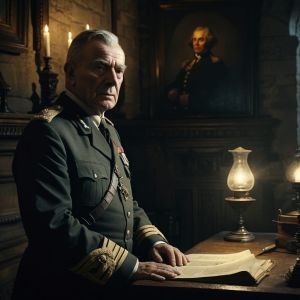 -- Herbert Northrop -- Brigadier of the British Army
 -- Odin Blackman -- Fort Physician
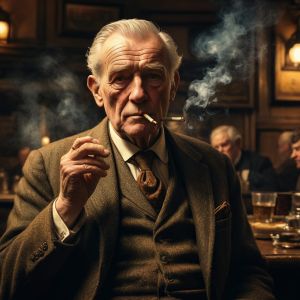 -- Glanville Briley -- Chief of Section Seven
 -- Jordon Foss -- Anglican Deacon & Chaplain


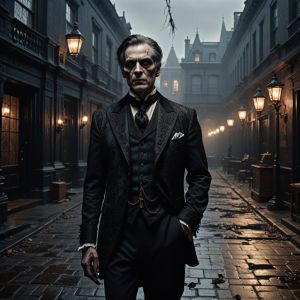 -- Earl Parish -- Prisoner Zero
 -- Glastonbury Fragment -- Occult Folio
